Sigrid Core
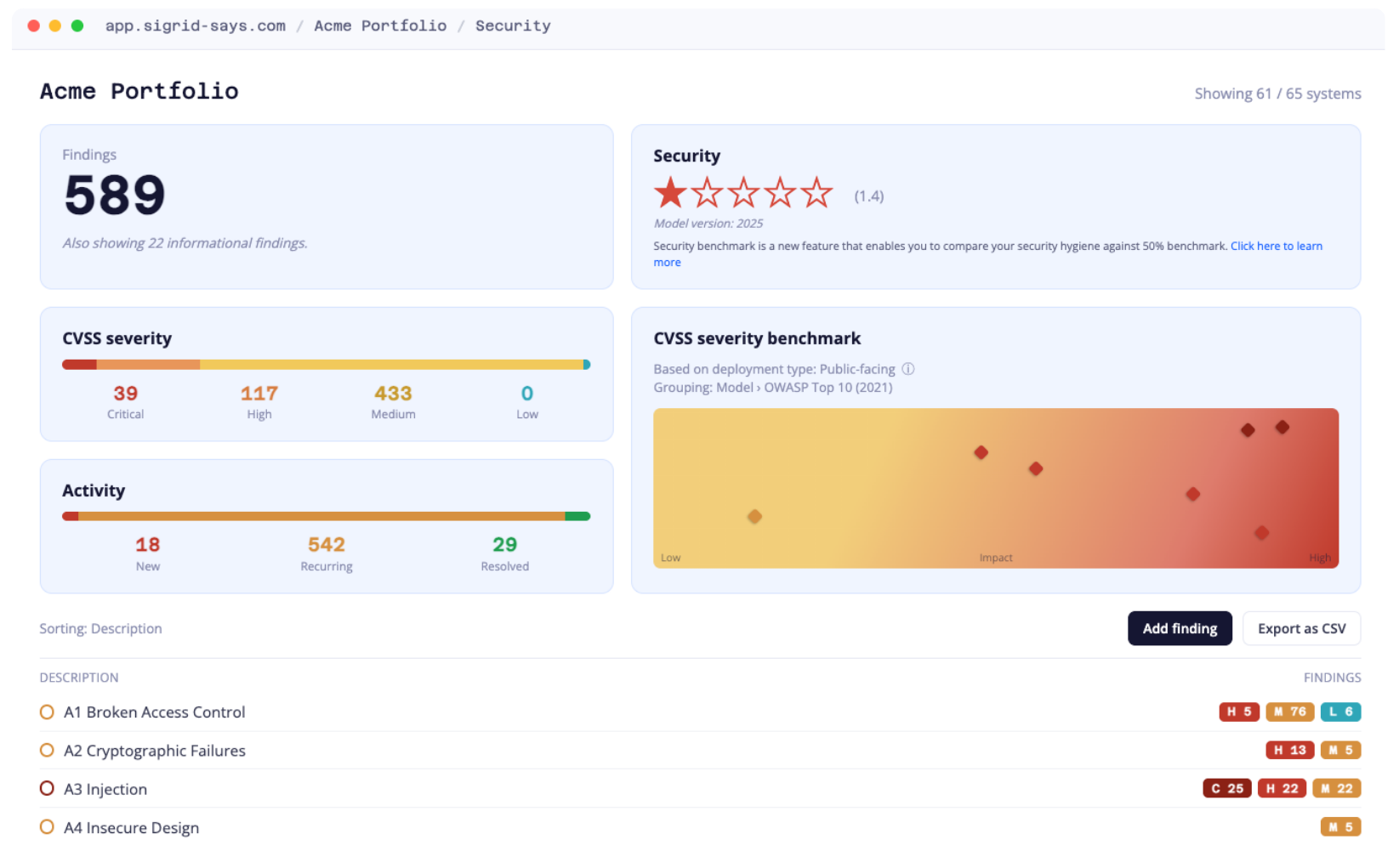
See where your software stands
Rates maintainability, architecture, security, and open source health for every system against one benchmark, so you know which to fix first.
Software Improvement Group has been named a Leader in the 2026 Gartner® Magic Quadrant™ for Technical Debt Management Tools.

AI coding agents now write energy software fast. Sigrid checks that it is secure, maintainable, and safe to change.
Trusted by energy and utility companies including
Named a Leader in the 2026 Gartner® Magic Quadrant™ for Technical Debt Management Tools. Get the analyst report
Software Improvement Group's benchmark of more than 40,000 systems shows that energy has the second-highest share of AI-generated code of any industry, and that most of its code is already hard to change.
77.3% of energy code falls below the recommended maintainability rating, against 86% globally. Energy's average rating is 3.2 stars, level with telecom and the lowest of the five industries in this comparison.
Energy Outlook 2027, Chapter 3. Share of code volume.
34.4% of energy code falls below the recommended architecture quality rating, against 50% globally, which makes the IT side of energy software comparatively well placed for AI-driven change. The sharper risk sits at the IT/OT boundary, where SCADA and control systems were never built for AI integration.
Energy Outlook 2027, Chapter 5. Share of code volume. Energy average: 3.8 stars.
Across Software Improvement Group's global benchmark, 71% of code has a low degree of security controls. Large systems score lowest, and energy has the lowest share of large systems of any industry in this benchmark cut, at 3.4%.
Energy Outlook 2027, Chapter 4. Global benchmark figure, not an energy-only figure. Share of code volume.
66.7% of energy code scores below the recommended open source health rating. The average enterprise organization relies on 132 open source libraries, and open source dependencies are the most likely vector for an AI-assisted attack.
Energy Outlook 2027, Chapter 4. Share of code volume. The energy average is 3.5 stars.
Global figure
of energy code falls below the recommended maintainability rating
86% globally
That is the second-highest share of any industry in the benchmark this cycle. Detection covers Java, C#, and Python, so the true share is likely higher. Developers report far higher shares of newly merged code, but those figures are self-reported.
Energy Outlook 2027, Chapter 1. Share of enterprise code in production.
The experiment compared 16 projects built by four popular LLMs with human-written projects. The set was limited, so test the result against your own code.
Energy Outlook 2027, Chapter 1.
About 70% of organizations with an AI system run traditional AI and machine learning, such as predictive maintenance, and about 15% run agentic systems. Many utilities keep an engineer in the loop to review the output.
Energy Outlook 2027, Chapter 6. Benchmark-wide figure. The recommended level is 3.5 stars.
That is 5.8 full-time developers. A large enterprise running 10 systems at 2 stars carries roughly €9 million per year in unnecessary maintenance overhead. A shortcut in a system that helps balance grid load is a different category of problem from one in a trading platform.
Energy Outlook 2027, Chapter 2. Calculated at an average developer cost of €150,000 per year.
That equals nearly one additional full-time developer. Agentic coding tasks can use up to 1,000 times more tokens than standard code chat.
Energy Outlook 2027, Chapter 1. SIG calculation at €200 per developer per month, based on a published Anthropic estimate.
Much of what energy needs to protect is operational technology that cannot simply be taken offline to patch.
Energy Outlook 2027, Chapter 4. Source: Dragos 2026 OT Cybersecurity Year in Review (press release, year in review).
Broken access control (31.5%) and injection (23.4%) are the most detected OWASP Top 10 findings.
Energy Outlook 2027, Chapter 4. Benchmark-wide figure.
Well-structured, low-debt code is auditable, testable, and patchable. A high security rating does not guarantee full security.
Energy Outlook 2027, Chapter 2. A correlation across the Sigrid benchmark.
Sigrid measures the software you have and checks the code AI writes next.

See where your software stands
Rates maintainability, architecture, security, and open source health for every system against one benchmark, so you know which to fix first.

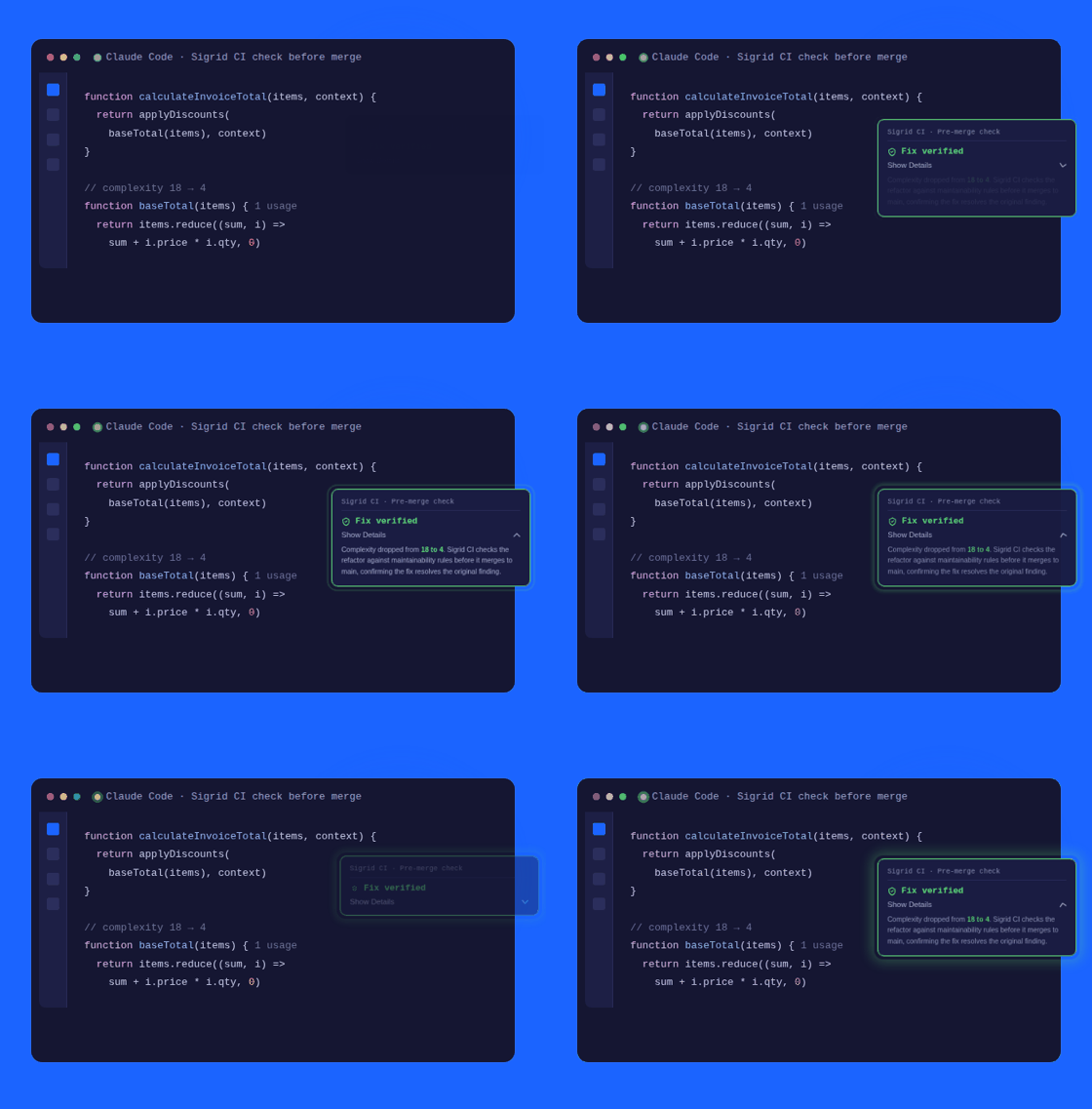
Check what AI writes before it is committed
Plugs into Claude Code, GitHub Copilot, Cursor, and ChatGPT through MCP and checks every change against your architecture and standards.
Axis anchors agents in your architecture, plans their work, catches risk in real time, and cleans up what's already there. Hover a step to see it on the loop.
Gives your AI agents a continuous, accurate map of your architecture, so they act with full context and burn fewer tokens.
Understand current architecture, explore the code base.
Surfaces current and emerging risks, writes the plan to fix them, and recommends the right model for the job.
Triage security findings, prepare OSS upgrades, prepare rearchitect scenarios.
Checks every agent change against your architecture, security, and quality standards. Drift and new vulnerabilities get flagged before they land, and token spend goes down instead of up.
Guardrail security issues, guardrail maintainability issues, prevent architecture drift.
Refactors technical debt and security risks on its own, then hands a cleaner map back to Ground. Your team ships instead of cleaning up.
Maintainability refactoring, OSS patching, security remediation, architecture correction.
“SIG’s consultants have in-depth IT knowledge, can identify risks within the IT landscape, and are able to deliver high quality reports within short lead time. These insights truly help Eneco Group in M&A processes.”
“I was impressed by the thoroughness of the results and the short lead time.”
“The SIG analysis helped us regain control. SIG’s recommendations enabled us to minimize the fallout. That allowed us to reallocate our resources back to align with our strategic objectives. Great work by SIG!”

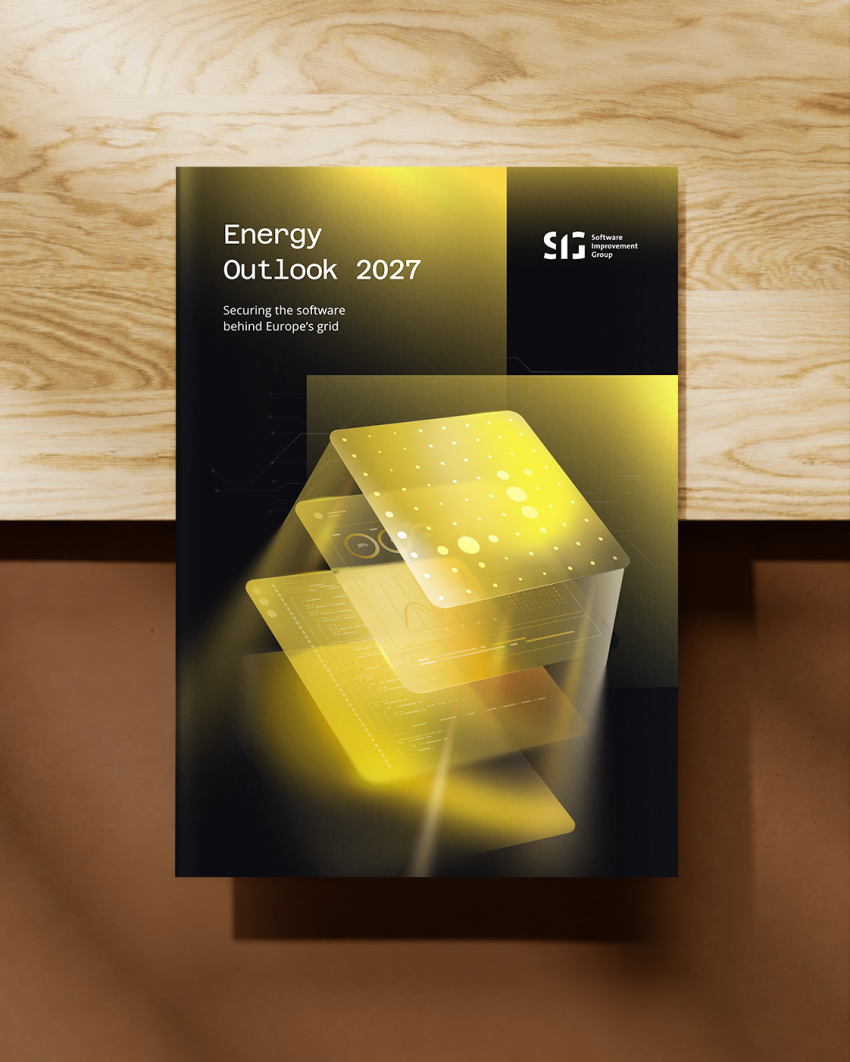
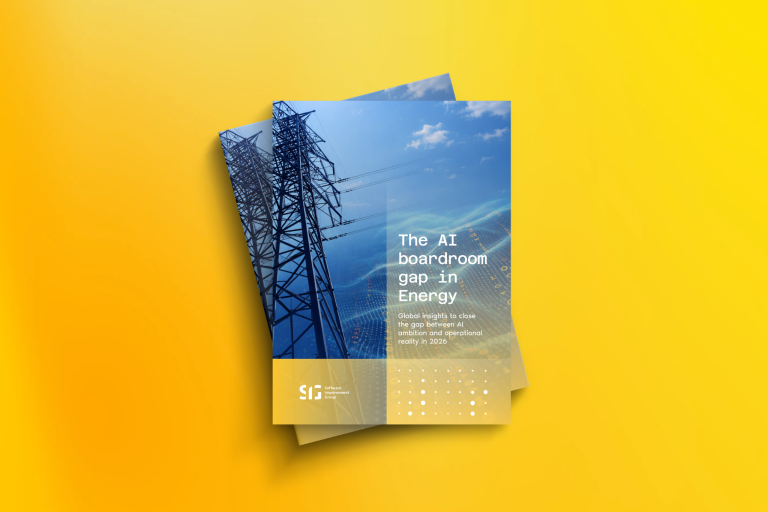
Benchmark data on AI coding, technical debt, security, and architecture in energy and utilities.
Read the report
How energy leaders can harness AI's momentum, strengthen governance, and unlock measurable value.
Read the report
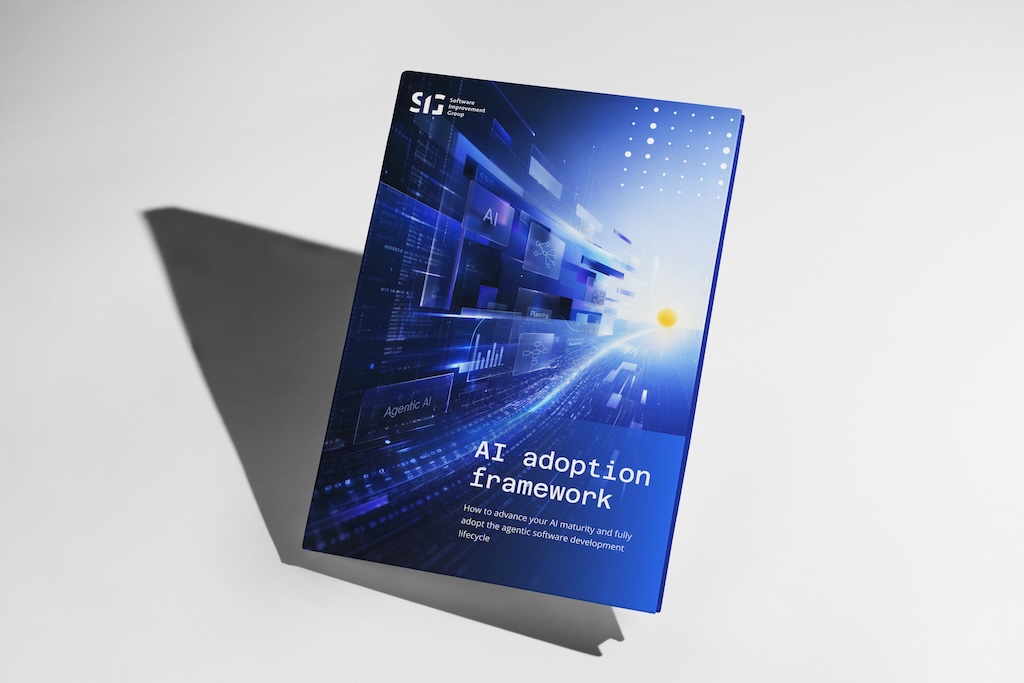
Five adoption levels, from AI chat to self-improving systems, and the governance each one needs.
Read the framework
Agent deployment jumped from 11% to 53% of organizations in two years, but only 23% see real ROI from AI agents.
Listen to the episodeAI code governance is checking AI-written code against defined architecture, security, and maintainability standards while it is written, and keeping a record of what was checked and fixed. In energy it matters now because AI already writes 3.7% of enterprise production code, the second-highest share of any industry in Software Improvement Group's benchmark. Sigrid Axis applies it inside the coding agent's loop. The AI code governance page covers the wider approach.
Only partly: energy code has stronger architecture than the global average, but 77.3% of it falls below the recommended maintainability rating. Architecture is the strength, with 34.4% of energy code below the recommended rating against 50% globally. Maintainability is the gap, against 86% globally, so agents start from code that is already hard to change. AI amplifies what is already there: where quality is measured and managed, agents speed up delivery, and where it is not, they speed up debt.
Sigrid measures 3.7% of enterprise production code in energy as AI-generated, the second-highest share of any industry in Software Improvement Group's benchmark. The global figure is 1.9%. That is a share of an entire body of code, most of it written years or decades before these tools existed. Detection covers Java, C#, and Python with over 95% accuracy, so the true share is likely higher. Developers report far higher shares of new code: DX's Q2 2026 report found 52.7% of merged code is AI-authored, but that figure is self-reported.
77.3% of energy code falls below the recommended maintainability rating, against 86% globally, while 34.4% falls below the recommended architecture rating, against 50% globally. 66.7% of energy code also scores below the recommended open source health rating. Energy's average maintainability rating is 3.2 stars, the lowest of the five industries in that comparison, level with telecom. Security is measured across the whole benchmark, where 71% of code has a low degree of security controls.
Software Improvement Group estimates that moving one system from 2 to 4 stars of maintainability frees up 5.8 full-time developers, worth about €870,000 per year. That uses an average developer cost of €150,000. A large enterprise running 10 systems at 2 stars carries roughly €9 million per year in unnecessary maintenance overhead. In energy, a shortcut in a system that helps balance grid load is a different category of problem from one in a trading platform. A Technical Debt Scan shows where your own debt sits.
In Software Improvement Group's analysis, yes: AI-generated code carries roughly double the security risk violations of human-written code and is less maintainable, especially in large systems. The security result comes from an experiment with 16 projects built by four LLMs, so it is a signal to test against your own code. For an energy company, the risk lands on infrastructure that is hard to take offline for remediation.
Yes, in one controlled experiment: adding Sigrid Guardrails to a coding agent's build loop cut high-risk security findings by roughly 97% and raised the maintainability score by roughly 24%. Software Improvement Group built the same project management system 20 times with Claude Sonnet 4.6, changing one variable: whether a mandatory quality and security check ran inside the loop. Every guided build scored higher on maintainability than every unguided build. It is a single experiment on one task and one model, not a universal law. Read the full write-up.
Run deterministic checks inside the agent's loop, so every AI-written change is held to your architecture and standards before it is committed. Sigrid Axis does this through MCP with Claude Code, GitHub Copilot, Cursor, and ChatGPT, and fixes what it finds. Every decision, whether fixed, accepted, or flagged as a false positive, is written back to Sigrid as a status update, which gives you a record when a regulator asks what the AI wrote. Many utilities already keep an engineer in the loop for AI decisions, and for AI-written code the matching control sits in the development loop. See the AI code governance page and the AI Adoption Framework.
An AI coding assistant loses context quickly at the IT/OT boundary, because SCADA and industrial control systems were never designed to be modified by, or even legible to, a general-purpose assistant. A defect in AI-assisted code inside grid-facing software is a physical-safety and continuity-of-supply question, not only a maintenance problem. Sigrid checks the source code on the software side of that boundary.
Both directives cover energy and put the same question to grid-facing software: how fast can you find an affected component and ship a safe fix. NIS2 lists energy among its sectors of high criticality (Directive (EU) 2022/2555) and asks for vulnerability handling and supply chain security. The Critical Entities Resilience Directive required national resilience strategies by 17 January 2026 and the identification of critical entities by 17 July 2026 (European Commission). Requirements differ by country. This is a high-level summary, not legal advice.
Request a free trial of Sigrid Axis or Sigrid Core, or read the full Energy Outlook 2027 for the benchmark behind them.