
Proactively manage, benchmark, and optimize your open source software (OSS) libraries and ensure resilient software development.


Sigrid evaluates your open source libraries across six key areas: known vulnerabilities, freshness, activity, stability, management, and legal licenses. This ensures a thorough examination of the software's reliance on open source components and their risks.
Much more than just an SCA tool, Sigrid's Open-Source Health feature includes a benchmark-based star rating system. This scoring method offers a consistent standard aligned with current market data and industry best practices, changing how you perceive and act upon open-source risks.
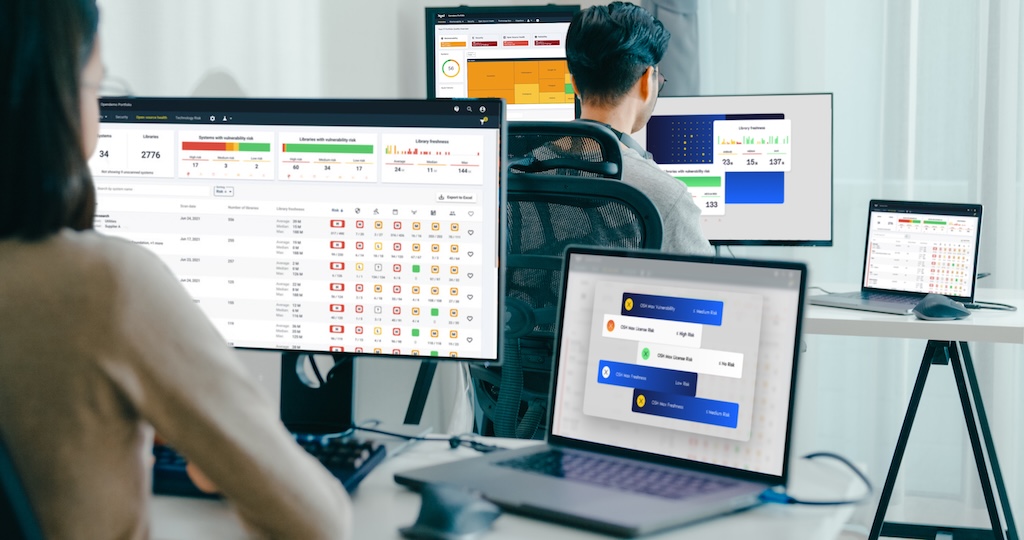

Set custom software composition analysis goals based on your unique business context. Prioritize open source security measures and governance with these goals and ensure alignment with organizational objectives.
Sigrid utilizes AI to provide detailed explanations and actionable mitigation advice tailored to each technology, drawing from a vast knowledge base and best-in-class public data sources.
Gain confidence in the security of your open-source components with insights for informed vulnerability management.
Benchmark your software composition analysis against market standards to gauge how your risk levels stack up against industry peers and competitors.
Sigrid aggregates data across all systems, helping you mitigate risks effectively—including upgrading, replacing, or protecting libraries.
“Thanks to Sigrid, we've significantly enhanced our expanding software portfolio's quality, slashing maintenance costs by 75%, effectively mitigating open-source security risks, and allowing us to make better-informed investment decisions.”
Sigrid's Open Source Health (OSH) analyzes your project's dependencies in three key areas: known vulnerabilities, dependency freshness, and license usage. It scans configuration files from common dependency management systems like Maven, NPM, and NuGet to gather this information. You can find more details in the Open Source Health documentation.
Sigrid uses multiple data sources to identify vulnerabilities, including the National Vulnerability Database (NVD), Sonatype OSS Index, Google OSV, and the GitHub Security Advisory API. It cross-references your project's dependencies against these databases to flag known security issues.
Sigrid can filter out internal dependencies to avoid exposing sensitive information, but this requires manual configuration by SIG. If you need this, make sure to inform SIG about your internal dependencies and their naming conventions before onboarding.
While most ecosystems link vulnerabilities to CVEs, some provide their own data that isn't connected to the CVE system. Sigrid gathers data from multiple sources, so you might occasionally see vulnerabilities without CVE numbers.
The risk thresholds are displayed as a mouseover on the Open Source Health page in the top tile that summarizes risks. For the most up-to-date information, check the Open Source Health documentation.
We recommend running OSH scans regularly, ideally as part of your CI/CD pipeline. This ensures you catch any new vulnerabilities or outdated dependencies quickly. You can set this up using our Sigrid CI integration.
Yes, Sigrid's Open Source Health feature includes license analysis. It identifies the licenses of your dependencies and flags any potential compliance issues. This can help you avoid legal risks associated with certain open source licenses. standalone SCA tools
While standalone Software Composition Analysis (SCA) tools focus solely on dependencies, Sigrid's OSH is part of a broader software quality platform. This integration allows you to see how open source usage relates to other aspects of your software health, providing a more comprehensive view. You can learn more about Sigrid's approach in our product overview.