
AI legislation in the US: A 2026 overview
In this article
Summary
The United States has introduced several key legislative measures to regulate AI, but the complexity of federalism still makes a unified AI policy difficult.
Since Donald Trump began his second term in 2025, federal policy has emphasized “innovation-first” approaches while states continue to pass enforceable AI rules that start taking effect in 2026.
This article serves as a general and up-to-date overview of current AI legislation in the US, so that business leaders in America and beyond can better prepare for compliance.
A complete and current overview of US legislative AI measures and principles
The legislative measures and principles listed below are meant as a general overview. While the timeline for many of these measures varies, the following provides an up-to-date overview of current efforts.
National Artificial Intelligence Initiative Act of 2020 (NAII)
Signed during President Trump’s first term, the National Artificial Intelligence Initiative Act of 2020 legislation promotes and funds artificial intelligence innovation initiatives throughout key federal agencies.
Executive order: Removing barriers to American Leadership in Artificial Intelligence
The executive order titled “Removing Barriers to American Leadership in Artificial Intelligence”, signed by President Trump on January 23rd, 2025, aims to sustain and enhance America’s global AI dominance by promoting human flourishing, economic competitiveness, and national security.
Winning the Race: AMERICA’S AI ACTION PLAN
Winning the Race: AMERICA’S AI ACTION PLAN introduces a set of policy recommendations that aim to secure U.S. global AI dominance, framing AI leadership as essential for economic growth, national security, and a new era of innovation.
AI Training Act
The AI Training Act (S.2551) is enacted (Public Law 117-207, signed in 2022). It requires the Office of Management and Budget (OMB) to establish or otherwise provide an AI training program for the federal acquisition workforce—supporting federal readiness as agencies procure and deploy AI-enabled systems.
State-level AI legislation
According to the National Conference of State Legislatures, more and more states have introduced AI-related legislation over the last few years. In the 2025 legislative session, all 50 states, Puerto Rico, the Virgin Islands, and Washington, D.C., have introduced legislation on this topic. Thirty-eight states adopted or enacted around 100 measures this year.
For the most current view of 2026 activity, NCSL maintains a searchable Artificial Intelligence Legislation Database, which tracks all introduced AI bills (enacted and pending) for 2025 present.

Introduction: When AI technology meets legislation
Artificial Intelligence was once the stuff of science fiction, but today it has become one of the fastest adopted business technologies in history and in 2026, it is increasingly treated as mission-critical software rather than “just another tool.”
AI has become a boardroom priority. According to BCG’s AI Radar 2026, 65% of CEOs say accelerating AI is one of their top three priorities for 2026. This surge in AI adoption highlights its profound impact, comparable to the revolutionary advent of electricity. McKinsey reports today, 88% of organizations report using AI technology in at least one business function, and 64% say that AI is enabling their innovation.
However, with great opportunities significant challenges and uncertainties come.
While the potential benefits of AI for business, society, healthcare, transport, and culture are significant, these advantages are overshadowed by real risks, including security breaches, misinformation, and flawed decision-making processes.
While the EU leads in AI regulation, other countries are also developing their own frameworks.
According to more recent AI regulatory trackers, governments and regulators worldwide are moving quickly to keep legal frameworks from becoming obsolete but approaches vary widely. Emerging regimes range from comprehensive, cross-sector AI laws to sector- or use-case-specific rules, alongside non-binding principles, guidelines, and standards.
The OECD’s AI Policy Observatory underscores the scale of this activity, hosting a repository of 1,000+ AI policies across 70+ jurisdictions, providing an up-to-date global view of AI governance efforts.
Stanford HAI’s latest AI Index (the 2025 edition, which remains the most recent as of the time of updating this article) reports that mentions of AI in legislative proceedings across 75 major countries rose 21.3% in 2024 up to 1,889 from 1,557 in 2023 and have grown more than ninefold since 2016.
American AI legislation and the complexity of federalism
The closest initiative is the National Artificial Intelligence Initiative Act of 2020 (NAII) introduced by President Trump in his first term, and the recently introduced set of policy recommendations in the recently published: Winning the Race: AMERICA’S AI ACTION PLAN.
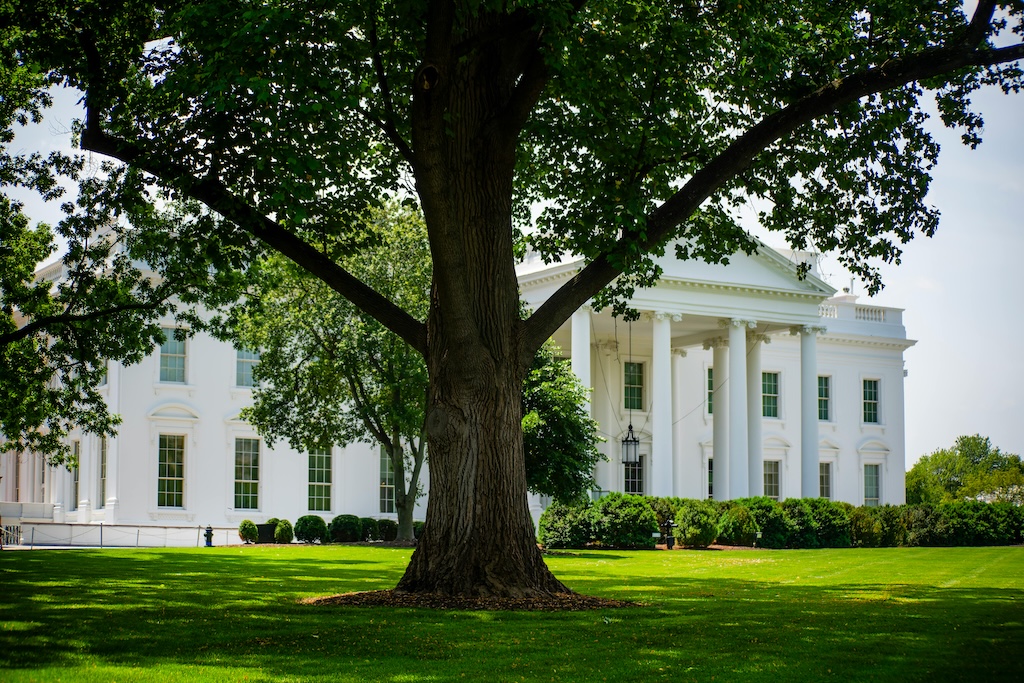
In the United States, federalism still makes it challenging to implement a single, unified AI policy. There is still no overarching “AI Act” at the federal level.
At the same time state laws begin to take effect in 2026 while the federal government signals increased willingness to contest or preempt certain state approaches.
American AI legislation and the effect of Trump’s presidency
Since President Donald Trump began his second term in January 2025, federal AI policy has undergone significant shifts.
While policy developments continue to evolve, the Trump administration’s focus on technological leadership and reduced regulatory oversight is a significant shift from past approaches taken by the former Biden administration.
What happened to Biden’s Executive Order and the AI Bill of Rights?
During the 2024 campaign run during the Republican National Convention in July 2024, Trump stated:
“We will repeal Joe Biden’s dangerous Executive Order that hinders AI innovation and imposes radical left-wing ideas on the development of this technology. In its place, Republicans support AI development rooted in free speech and human flourishing.”
As promised, mere days after Trump took office in January of 2025, these efforts have been revoked.
On January 23, 2025, President Trump signed a new Executive Order, titled “Removing Barriers to American Leadership in Artificial Intelligence.” This policy focuses on revoking directives perceived as restrictive to AI innovation, paving the way for “unbiased and agenda-free” development of AI systems.
In April 2025, the White House (via the Office of Management and Budget) instructed federal agencies to appoint Chief AI Officers, develop strategies to expand the government’s use of AI, and adopt minimum risk-management practices for “high-impact” AI uses, alongside agency generative AI policies. The guidance also rescinded Biden-era directives focused on safeguards and certain procurement restrictions, while emphasizing faster, more interoperable AI acquisition and prioritizing “American-made” AI, with privacy protections still cited as a requirement.
Biden’s EO 14144 got amended via EO 14306 on June 6, 2025
On July 23rd of 2025, the White House released “Winning the AI Race: America’s AI Action Plan”. A document that identifies over 90 Federal policy actions across three pillars – Accelerating Innovation, Building American AI Infrastructure, and Leading in International Diplomacy and Security. On that same day Biden’s Executive Order 14141 got revoked.
A day later, on July 24th of 2025, President Trump signed a trio of executive orders that he vowed would turn the United States into an “AI export powerhouse”, including one targeting what the White House described as “woke” artificial intelligence models. He also mentioned that his predecessor, Joe Biden, had “established toxic diversity, equity and inclusion ideology as a guiding principle of American AI development”.
On December 11, 2025, President Trump issued EO 14365, which promotes a “minimally burdensome” national AI policy framework and directs agencies to evaluate and, in some cases, challenge state AI laws.
On January 23, 2025, President Trump signed a new Executive Order, titled “Removing Barriers to American Leadership in Artificial Intelligence.” This policy focuses on revoking directives perceived as restrictive to AI innovation, paving the way for “unbiased and agenda-free” development of AI systems.
On July 23rd of 2025, the White House released “Winning the AI Race: America’s AI Action Plan”. A document that identifies over 90 Federal policy actions across three pillars – Accelerating Innovation, Building American AI Infrastructure, and Leading in International Diplomacy and Security.
A day later, on July 24th of 2025, President Trump signed a trio of executive orders that he vowed would turn the United States into an “AI export powerhouse”, including one targeting what the White House described as “woke” artificial intelligence models. He also mentioned that his predecessor, Joe Biden, had “established toxic diversity, equity and inclusion ideology as a guiding principle of American AI development”.
However, it is important to note that not all Biden administration AI efforts were rolled back. For example, Executive Order 14141 (The Biden 2025 AI Infrastructure EO) and the Executive Order 14144 (The Biden 2025 Cybersecurity EO). To this date, these Executive Orders remain intact, as the Trump Administration has not revoked them.
Let’s look at a more detailed overview of the current AI legislative landscape in the United States.

A detailed summary of important US legislative AI measures and principles
By studying the following key legislative measures and principles, organizations can better ensure their AI systems are compliant with emerging US regulations.
What is the National Artificial Intelligence Initiative Act of 2020 (NAII)?
The National Artificial Intelligence Initiative Act of 2020, introduced under the Trump administration, was one of the first major national efforts specifically targeting artificial intelligence. However, its primary focus is less on regulating AI and more on fostering research and development in the field. The Act aims to solidify the United States’ position as a global leader in AI innovation.
Purpose of the NAII Act
The primary purpose of the 2020 act is to guide AI research, development, and evaluation at various federal science agencies, to drive American R&D into AI technology, and champion AI use in government. The Trump-era Act advocated for “a more hands-off, free market–oriented political philosophy and the perceived geopolitical imperative of “leading” in AI.”
Impact of the NAII Act
The American AI Initiative’s central impact on business in the US has been the coordination of AI activities across different federal agencies. Below we list the main agencies affected and their directions, with emphasis on those affecting business across the country.
The National Science and Technology Council is to establish an Interagency Committee to coordinate federal programs and activities in support of the initiative.
The Department of Energy (DOE) is to establish the National Artificial Intelligence Advisory Committee to advise the President and the Initiative Office on matters related to the initiative.
The DOE must also carry out an artificial intelligence research and development program to:
- Advance artificial intelligence tools, systems, capabilities, and workforce needs; and
- Improve the reliability of artificial intelligence methods and solutions relevant to DOE’s mission.
The National Science Foundation (NSF) is to enter a contract with the National Research Council of the National Academies of Sciences, Engineering, and Medicine to conduct a study of the current and future impact of artificial intelligence on the workforce of the United States.
The National Institute of Standards and Technology is to develop voluntary standards for artificial intelligence systems, among other things.
Crucially, the goal of these standards is not—as is the case in the EU—to make AI technology safer, more secure, and more trustworthy, but instead “to advance US AI leadership.”
The NSF is also ordered to fund research and education activities in artificial intelligence systems and related fields.
And finally, the National Artificial Intelligence Initiative Act of 2020 is to provide regulatory guidance on AI, which “reflects American values.”
What is the Executive Order: Removing barriers to American Leadership in Artificial Intelligence?
The recent executive order titled “Removing Barriers to American Leadership in Artificial Intelligence”, signed by President Trump on January 23rd,2025, aims to sustain and enhance America’s global AI dominance by promoting human flourishing, economic competitiveness, and national security.
Purpose of the Executive Order
This order will revoke certain AI policies and directives that act as barriers to American AI innovation, essentially clearing a path for the United States to act decisively to retain global leadership in artificial intelligence. In order to maintain this leadership, AI systems that are developed must be “free from ideological bias or engineered social agendas.”
Key aspects of the Executive order
- Developing an Artificial Intelligence Action Plan
Within 180 days of this order, key advisors on science, technology, AI, crypto, national security, economic policy, and domestic policy, along with relevant government officials, must create and submit a plan to the President to carry out the policy in section 2 of this order. - Implementation of order revocation
Key officials, including the APST, the Special Advisor for AI and Crypto, and the APNSA, must immediately review all actions taken under the revoked Executive Order 14110 on AI. They will identify any actions that conflict with the new policy and work with relevant agencies to suspend, revise, or rescind them as necessary. If changes cannot be made immediately, exemptions will be applied until finalized.
What is AMERICA’S AI ACTION PLAN?
America’s AI Action Plan (released July 2025) remains a key roadmap for federal “innovation-first” actions. In 2026, it’s increasingly important to treat it as a directional policy signal (procurement expectations, infrastructure priorities, export posture), even where it is not itself enforceable law because it influences agencies’ implementation choices and enforcement priorities.
What is the impact of AMERICA’s AI ACTION PLAN?
The document identifies over 90 Federal policy actions across three pillars – Accelerating Innovation, Building American AI Infrastructure, and Leading in International Diplomacy and Security.
Key aspects of AMERICA’s AI ACTION PLAN
- Exporting American AI
The Commerce and State Departments will partner with industry to deliver secure, full-stack AI export packages – including hardware, models, software, applications, and standards – to America’s friends and allies around the world. - Promoting rapid buildout of data centers
Expediting and modernizing permits for data centers and semiconductor fabs, as well as creating new national initiatives to increase high-demand occupations like electricians and HVAC technicians. - Enabling innovation and adoption
Removing Federal regulations that hinder AI development and deployment, and seeking private sector input on rules to remove. - Upholding free speech in frontier models
Updating Federal procurement guidelines to ensure that the government only contracts with frontier large language model developers who ensure that their systems are objective and free from top-down ideological bias. - Ensuring a National Policy Framework for Artificial Intelligence.
The order’s goal is to promote a “minimally burdensome” national AI policy framework and reduce inconsistencies across state AI laws. It directs the Attorney General to establish an AI Litigation Task Force to challenge state AI laws deemed inconsistent with the EO’s policy, and directs Commerce to publish an evaluation of existing state AI laws.
State-level AI legislation
The National Conference of State Legislatures reports that an increasing number of states have
State-level AI legislation continues to expand. In 2025, 38 states adopted or enacted around 100 AI-related measures (NCSL), and this trend continues into 2026. What materially changes in 2026 is enforceability: multiple “compliance-grade” state laws now have effective dates in 2026, increasing the need for cross-state governance, inventories, and evidence of control.
Let’s look at a few key examples
The Colorado AI Act
Colorado enacted SB24-205 in 2024, but its obligations are not “effective since May 17, 2024.” The law’s operational requirements were scheduled for February 1, 2026 and were later delayed to June 30, 2026. The law uses a risk-based approach focused on “high-risk” AI systems and imposes a duty of reasonable care on both developers and deployers to protect consumers from algorithmic discrimination.
California’s AI laws
California remains fragmented, but 2026 makes that fragmentation more operational. Multiple AI laws have 2026 effective dates including SB 53 (Transparency in Frontier Artificial Intelligence Act) and AB 2013 (training data transparency). In practical terms: California compliance in 2026 is less about one statute and more about coordinating overlapping transparency, reporting, and disclosure duties across multiple AI use cases
Texas Responsible Artificial Intelligence Governance Act
Texas’s Responsible Artificial Intelligence Governance Act (often referred to as TRAIGA; C.S.H.B. 149) took effect January 1, 2026. It regulates certain uses of AI systems, provides for civil penalties and Attorney General enforcement, and includes a regulatory sandbox concept for testing under defined conditions.

US AI legislation and its implications for business
Although US AI legislation remains piecemeal, 2026 is a pivot year because multiple state laws begin to take effect, meaning “tracking bills” is no longer enough. Organizations need evidence of control: a clear inventory of AI systems, ownership, where systems run, how they’re governed, and how compliance is demonstrated across jurisdictions.
Software Improvement Group’s ‘AI boardroom gap 2026’ report highlights the need for governance. Regulatory pressure is rising while rules are fragmented. As a result, boards need strategies that are proactive, flexible, and geopolitically aware.
EY stated in their recent global survey findings that the majority of C-suite leaders feel that non-compliance with AI regulations is the most common AI risk.
According to the National Law Review (NLR), “Businesses should stay informed of policy developments while maintaining robust AI governance and compliance frameworks that can adapt to changing federal priorities while ensuring compliance with any applicable legal and regulatory obligations and standards.”
Moreover, the penalties for AI non-compliance in the US can be hefty.
AI-related penalties and fines in the US
At present, whilst there is no comprehensive federal Act governing AI use and risk mitigation, there is still a range of laws that can result in severe financial penalties, such as in the following examples:
- In 2022, China-based iTutor Group was fined by the USA’s Equal Employment Opportunity Commission (EEOC) for automated age discrimination in their AI hiring software. The company was fined USD $365,000 under the charge of AI bias.
- Also in 2022, California-based FinTech firm Hello Digit was fined $2.7 million for a faulty AI algorithm in their app, which left users paying unnecessary overdraft fees. They were penalized on grounds of AI efficacy by the US Consumer Financial Protection Bureau (CFPB).
- In 2023, two US lawyers were fined $5,000 for submitting citations in a court case that had been falsely generated by ChatGPT, breaching AI regulation on transparency and efficacy.
- In 2024, the SEC filed charges against two investment advisory firms for making false and misleading claims regarding their use of artificial intelligence. The companies reached a settlement with the SEC and had to pay a total of $400,000 in civil penalties.
- In September 2024, The Dutch Data Protection Authority (Dutch DPA) imposed a fine of 30.5 million euro and orders subject to a penalty for non-compliance up to more than 5 million euro on American company Clearview AI. The company offers facial recognition services. Among other things, Clearview has built an illegal database with billions of photos of faces, including of Dutch people.
- In July 2025, a federal judge mandated that two attorneys in a Colorado defamation case each pay $3,000. This ruling followed their use of artificial intelligence to draft a court filing that was rife with errors and references to fictitious cases. The judge found that they had breached court rules by filing this document, which featured more than twenty mistakes, including fabricated cases created by AI tools.
- In September 2025, The Federal Trade Commission announced to take action against multiple companies that have relied on artificial intelligence as a way to supercharge deceptive or unfair conduct that harms consumers. One of the companies, DoNotPay, claimed to offer an AI service that was “the world’s first robot lawyer,” but the product failed to live up to its lofty claims that the service could substitute for the expertise of a human lawyer. The company ended up settling for $193,000.
Conclusion
AI legislation in the US differs significantly from that in other parts of the world. So far, the focus has primarily been on innovation, government AI use, and reinforcing “traditional American values.”
For organizations operating within (and with) the US, navigating the myriad of AI legislation and proposals can be challenging. Nevertheless, it’s essential to keep an eye on what is needed for US AI compliance, especially during a period with so much change.
In addition, global operations get tangled. For example, an American organization that markets, deploys, or has AI outputs used in the EU will have to meet EU AI Act obligations, even if it’s headquartered elsewhere.
Learn more about AI use and regulation in business by exploring the Software Improvement Group blog.
Are you ready for the complexities of US AI legislation? Our AI readiness guide, authored by Rob van der Veer, simplifies compliance with evolving regulations like the Colorado AI Act (last updated in August of 2025). With 19 steps covering governance, security, and IT. It helps organizations minimize risk and harness AI’s full potential, while staying ahead of regulatory changes.