AI coding at scale, without losing control.

Gain the visibility, structure, and governance needed to manage your AI-generated code at scale.


Man in glasses working at a computer with overlaid code on the screen.

AI coding boosts productivity—but it introduces real risks.

Yellow circles graphic

of LLM-generated code suggestions exhibit security vulnerabilities.


(IEEE)
0 %
Yellow circles graphic

of software defects in production will result from a lack of human-oversight.


(Gartner)
0 %
Yellow circles graphic

of developers say AI tools lack context, internal architecture, and company knowledge.


(Stack Overflow)
20 %
Yellow circles graphic

of AI-generated code samples contain licensing irregularities.


(LeadrPro)
0 %

Take control of your AI generated code

AI coding is helping developers work faster, but it’s also changing the way software is built. You need to ensure this new way of working doesn’t introduce hidden risks or long-term costs.

Yellow dots

Embrace AI-assisted coding with enterprise-grade control.

Check if code is AI generated

Meet Sigrid®, your new accurate AI code detector

AI-generated code is difficult to distinguish from human-written code, making it challenging to track its usage across your software portfolio.

Sigrid® identifies and tracks AI-generated code across your portfolio, so you know exactly where and how it’s being used.

Let's talk
vector arrow graphic

Unleash quality and security in your AI assistant

Bring the power of Sigrid into your AI coding assistant through MCP integration

AI coding assistants promise a boost in developer output. However, if the quality of the generated code is not checked, development is often slowed down because of the time it takes to re-work faulty AI suggestions.

Sigrid® integrates directly with your preferred AI coding assistant through our MCP server. This allows real-time quality and security checks on AI generated code. If a code suggestion falls short, Sigrid® provides feedback instantly, helping the AI code assistant improve AI-generated results according to Sigrid standards within seconds.

Modernize faster with system-level context

Provide the context that AI coding assistants lack

AI coding assistants move fast, but they lack context. They can't see system-wide architecture, dependencies, or duplication patterns.

Sigrid® bridges that gap.
Our AI-ready modernization recipes provide context-aware guidance for AI-assisted modernization, ensuring efficient and targeted refactoring.

Let's talk
vector arrow graphic

Govern AI-generated code at scale

Boosts development productivity and stay in control

AI code introduces significant challenges related to code quality, security, and legal issues.

With Sigrid, you can ensure that the AI code meets high-quality standards, security vulnerabilities are spotted before they become problems, and legal issues are avoided. Without visibility into AI-generated code, organizations risk compromising software quality, security, and compliance. Evaluating AI code across your portfolio is essential to stay in control while scaling AI safely.

Let's talk
vector arrow graphic
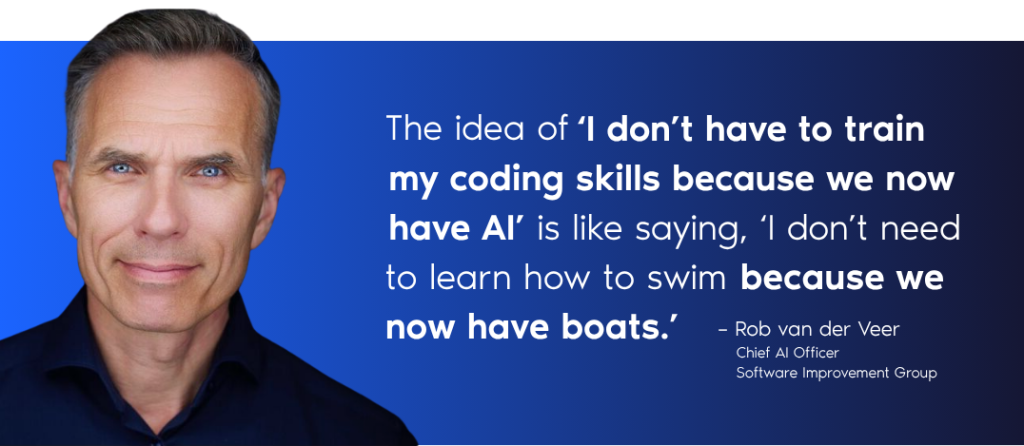
“The idea of ‘I don’t have to train my coding skills because we now have AI’, is like, ‘I don’t need to learn how to swim because we now have boats.’” – Rob van der Veer, Chief AI Officer, Software Improvement Group

AI coding resources

AI explained for non-technical business leaders

Discover what AI is, how it works, and understand the difference between deep learning and machine learning....

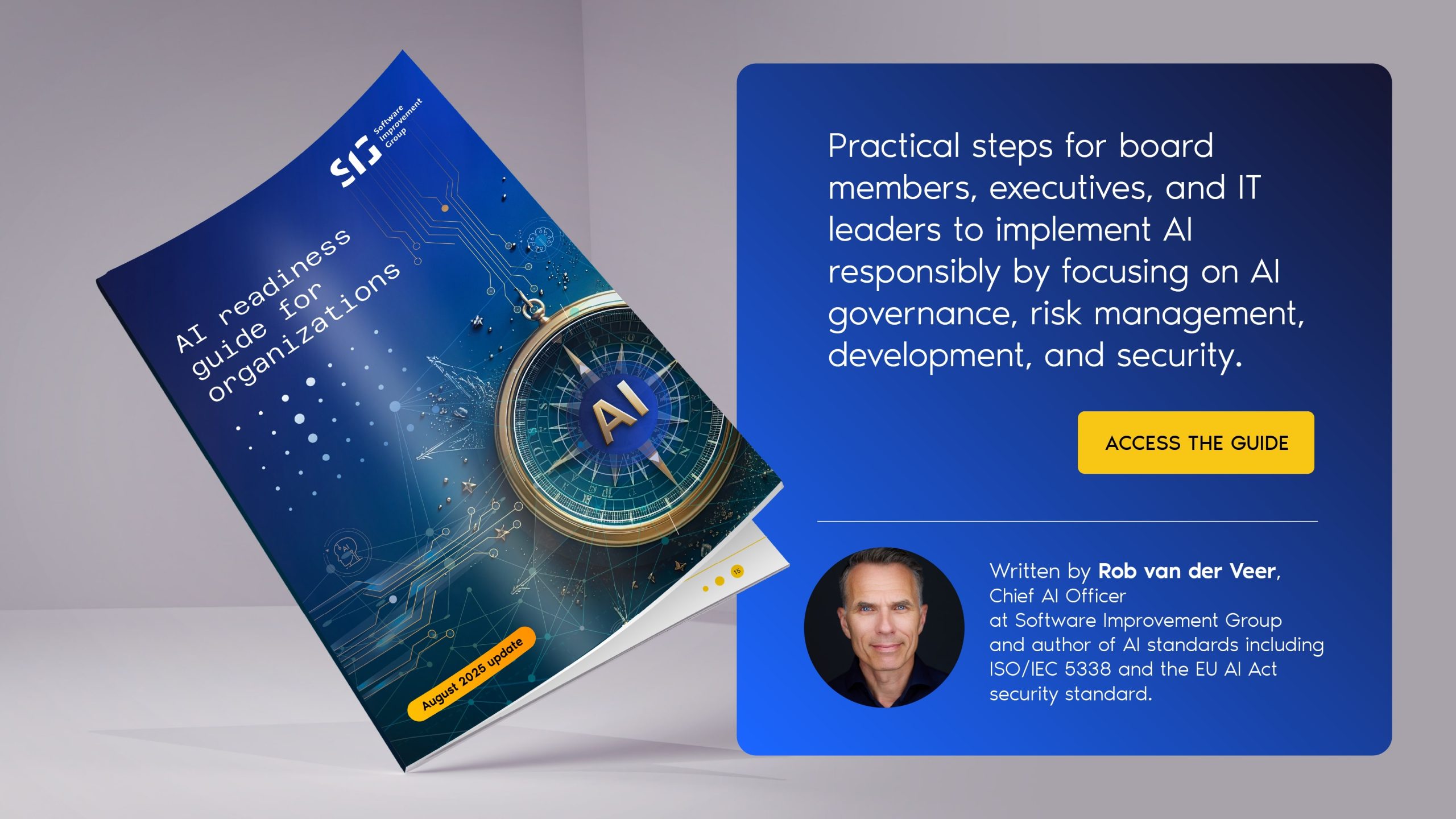
AI readiness guide for organizations

Practical steps for leaders to implement AI in organizations, focusing on AI governance, risk management, development, and security. Written by Rob van der Veer – Chief AI Officer at SIG, ...

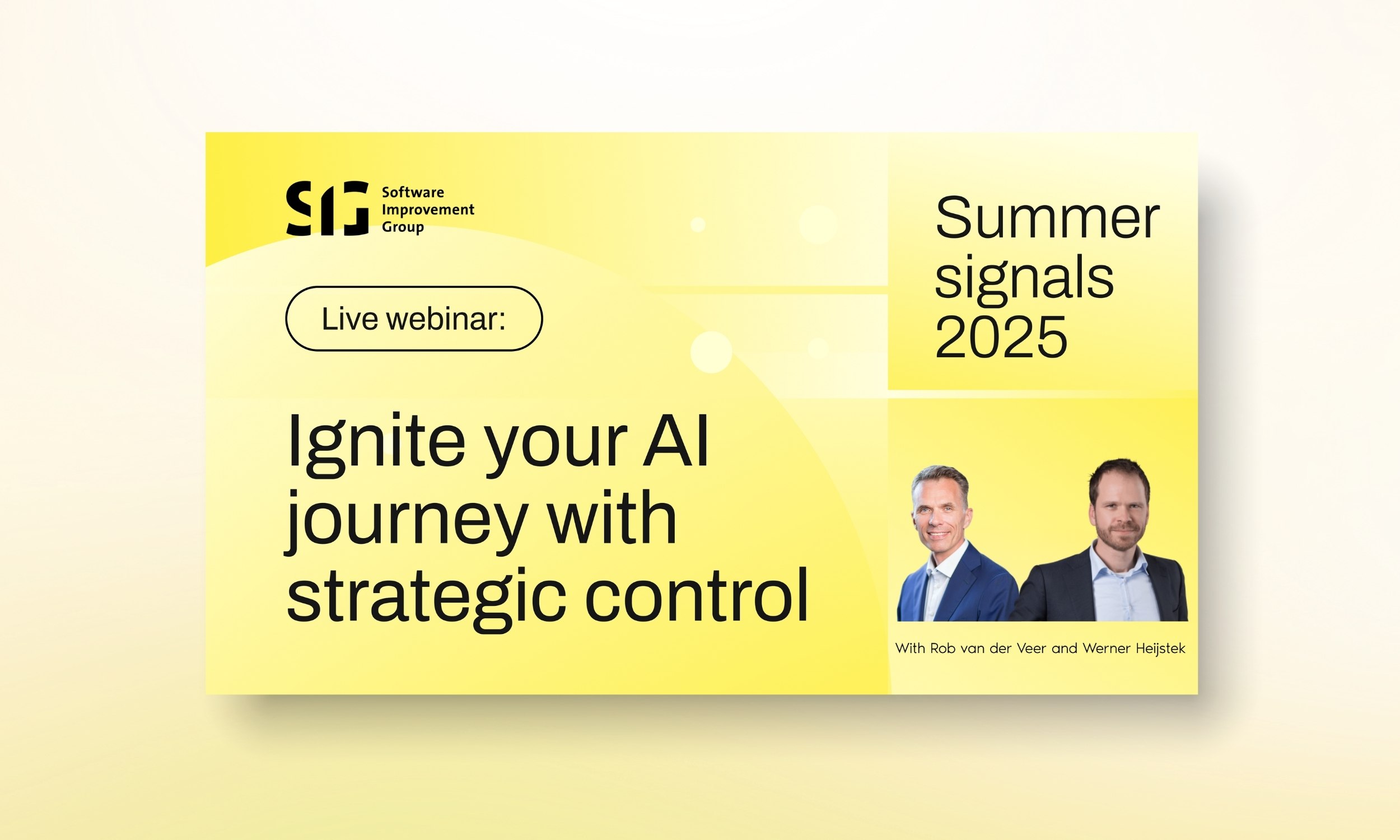
Summer signals 2025 – AI webinar

Live webinar – August 26th, 3:00 PM CEST (9:00 AM EST) Ignite your AI journey with strategic control Safeguard AI-generated code. Build smarter systems. Prepare your organization. Signup n...

Frequently asked questions

What are the risks of relying on AI-generated code?

AI-generated code often contains hidden issues—such as security vulnerabilities, licensing conflicts, and architectural inconsistencies. AI tools lack context about your internal codebase, architecture, and business rules, which can result in hard-to-maintain systems and increased technical debt. Without oversight, productivity gains can quickly be outweighed by rework and risk.

Can't we just use another AI tool to review the code AI generates?

LLMs can generate and even help review code—but they’re fundamentally limited. They rely on associative, pattern-based reasoning, which makes them fast but not always accurate. They can miss critical flaws because they don’t have full system context or understanding of your architecture. That’s why you need deterministic analysis tools and expert reviews to properly govern AI-generated code.

AI coding assistants hold great promise for accelerating software development and modernizing legacy systems. However, they also introduce significant challenges related to code quality, security, legal issues, and efficiency. Enterprises adopting these tools need comprehensive solutions to manage these risks effectively.

In my organization AI coding is not allowed, so this doesn't apply to me right?

Whether formally allowed or not, most developers are already using AI coding assistants like GitHub Copilot or ChatGPT to some extent. Even in organizations that discourage it, developers often find ways to use these tools because they significantly speed up tasks like writing test code, generating boilerplate, or exploring unfamiliar code.

AI-generated code is difficult to distinguish from human-written code, making it challenging to track its usage across the software portfolio.

What are the cybersecurity risks of AI-generated code?

AI-generated code introduces serious security risks because it’s often trained on flawed or outdated public code. It may include insecure coding patterns or even hallucinate components—like made-up package names—which attackers can exploit.

In addition, because AI lacks awareness of your architecture and policies, it can accidentally bypass security protocols or introduce unsafe dependencies.

Will AI replace developers?

No, but it will change the way developers work, and organizations need to adapt accordingly. AI can accelerate certain tasks. But writing code is only a small part of software engineering. Understanding problems, collaborating with stakeholders, maintaining architecture, and ensuring long-term quality are still human-led tasks.

AI also introduces new responsibilities: code review becomes even more critical, and technical debt can accumulate faster if output isn’t monitored. Instead of replacing developers, AI tools are reshaping their roles—making governance, context, and architectural oversight more important than ever

What is vibecoding?

Vibecoding refers to a style of AI-assisted development where the user builds software by writing natural language prompts instead of writing code manually.

This approach sits at the far end of the AI coding spectrum. It’s often used for quick prototyping but is not suited for production environments, especially in complex systems. That’s because vibecoding typically lacks essential software engineering principles like architecture, reuse, testability, and encapsulation.

We see that enterprise and government clients rarely use vibecoding beyond experimentation, precisely because of these limitations. It can be fun and enabling, but without guardrails, it introduces significant risks.


Experience Sigrid live

Request your demo of the Sigrid® | Software Assurance Platform:
  • This field is for validation purposes and should be left unchanged.

Register for access to Summer Sessions

This field is for validation purposes and should be left unchanged.
Name*
Privacy*