
Raising the standard: How SBIR is improving public-sector software quality across the Caribbean with Sigrid®

Introduction
Stichting Beheer ICT Rechtshandhaving (SBIR) develops and manages mission-critical applications for the justice sector in the Dutch Caribbean region, serving entities across the entire justice chain.
Funded by the 4 governments of Aruba, Curaçao, Sint Maarten and the Netherlands, SBIR oversees a broad portfolio of applications that span the entire justice chain — from police and prosecution to the Courts and the prisons, immigration authorities, and the Coast Guard. Though modest in size, the foundation plays a pivotal role in maintaining the digital backbone of public safety across the Dutch Caribbean region.
Local context brings challenges: distributed teams, resource scarcity, and infrastructure limitations. Yet SBIR’s ambition is clear — to raise the quality of public-sector software across the region and prove that Caribbean-developed systems can match their European counterparts.
The challenge
Can local software stand shoulder-to-shoulder with the Netherlands and Europe?
When SIG was brought in, SBIR was at a crossroads. Two applications (ACTPOL and FMS) were under scrutiny. Delays, technical debt, and concerns about long-term viability raised red flags.
At the same time, SBIR was seeking additional funding. To secure it, they needed external validation — and confidence that their suppliers were delivering sustainable, high-quality code.
“We needed an independent partner to help us measure the systems. They can tell us that everything is perfectly fine, but we needed to know for sure. With Sigrid®, we’re getting more guarantees that the software that’s being delivered is up to par.” – Joel Sanches, Board Member, SBIR
Working with Software Improvement Group
Quality as a foundation for credibility
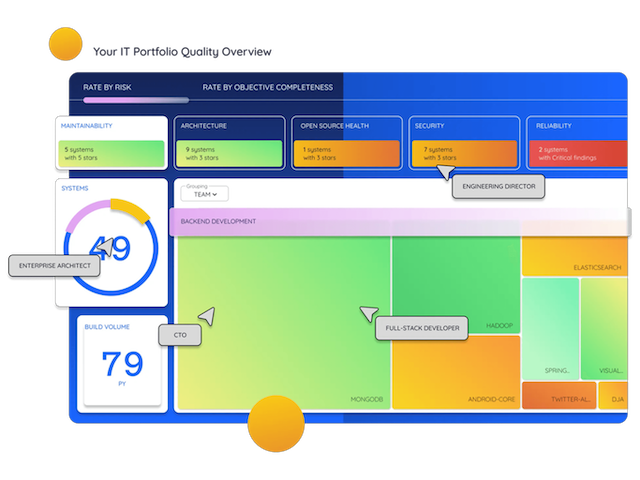
SIG’s engagement began with an in-person Software Risk Assessment to fully understand the context. Afterwards, the team continued their journey by implementing Sigrid® for a constant overview of their software quality moving forwards.
The findings were constructive:
- Code quality was at market average, a strong result given the circumstances
- Developer knowledge levels and process maturity varied, highlighting growth opportunities
- Business risks tied to long-term maintainability and scalability were clearly identified
Instead of simply reporting issues, SIG offered a clear and actionable improvement roadmap. This included:
- Detailed feedback on system quality, both on the code and architecture level
- Identification of critical security risks, in the source code and open-source packages, complete with severity and prioritization
- Insights into development practices and team capabilities
- Recommendations for continuous improvement, from developer training to technical governance
- A long-term collaborative approach, leveraging Sigrid® measurements to track progress at both system and portfolio levels, enabling software quality governance
Crucially, SIG’s role extended beyond oversight. The team engaged directly with local developers — holding working sessions to walk through findings, embed platform best practices, and ensure that improvements weren’t just implemented but understood and sustained. SBIR didn’t just take these recommendations on board. They mobilized with their local delivery partner.
Working closely with SIG, their partner began improving security, remediating code and architecture issues, and elevating knowledge across teams.
Five team leads were trained in writing high quality software, together with guidelines for maintainability, architecture, security, open source usage and development process best practices.
These changes contributed to a deeper cultural shift. Development teams began to adopt a more proactive, quality-focused mindset. Continuous feedback from Sigrid® — reinforced through expert sessions with SIG — encouraged a shift from reactive fixes to preventive improvements, especially in security practices.
Results: Increased quality, stronger funding position, and growing confidence
SBIR has already delivered measurable improvements:
- Portfolio quality increased in the first year of monitoring, showing that the development teams are actively improving quality and their development speed.
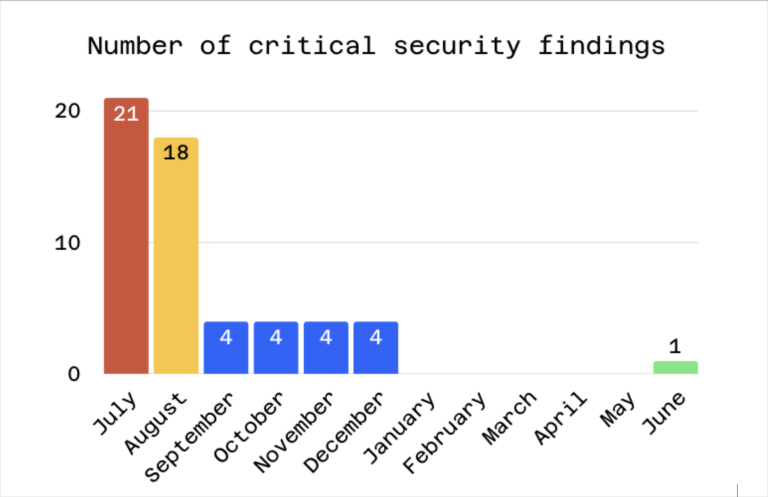
- ️Within half a year, nearly all critical security findings were resolved, and the team is now well positioned to address new findings as they arise.
- Technical debt reduced, improving maintainability and speed
- Portfolio scope expanded: 13 systems now under continuous monitoring
- Improved transparency enabled better steering and governance
This transparency also improved confidence at the leadership level. With Sigrid dashboards and regular review sessions, SBIR’s non-technical leaders gained new clarity into supplier performance and system risks — enabling more informed decisions and reducing uncertainty.
“It’s more visible what you’re talking about — more direct, not a fussy discussion. We can see what’s going wrong, what’s going good, and what needs more attention.” – Hans Schreuder, Managing Director of the Board, SBIR
A Model for Regional Software Excellence
SBIR is proving that location and size don’t dictate capability. Their systems are built by local expertise, and they’re increasingly on par with those developed in Europe’s software landscape. For example, the new Border Management System scores above average in the architecture, security and maintainability benchmark.
They’re not just improving their own systems. They’re building an ecosystem of better software practices, stronger supplier relationships, and shared accountability.
What's next? From improvement to leadership
SBIR’s roadmap now includes:
- Expanding coverage to more applications
- Reaching 4-star quality across the full portfolio
- Ongoing guidance, training, and maturity assessments with SIG
With SIG’s continued support, SBIR is well on its way to becoming a benchmark for public-sector software — not just in the Caribbean, but far beyond.