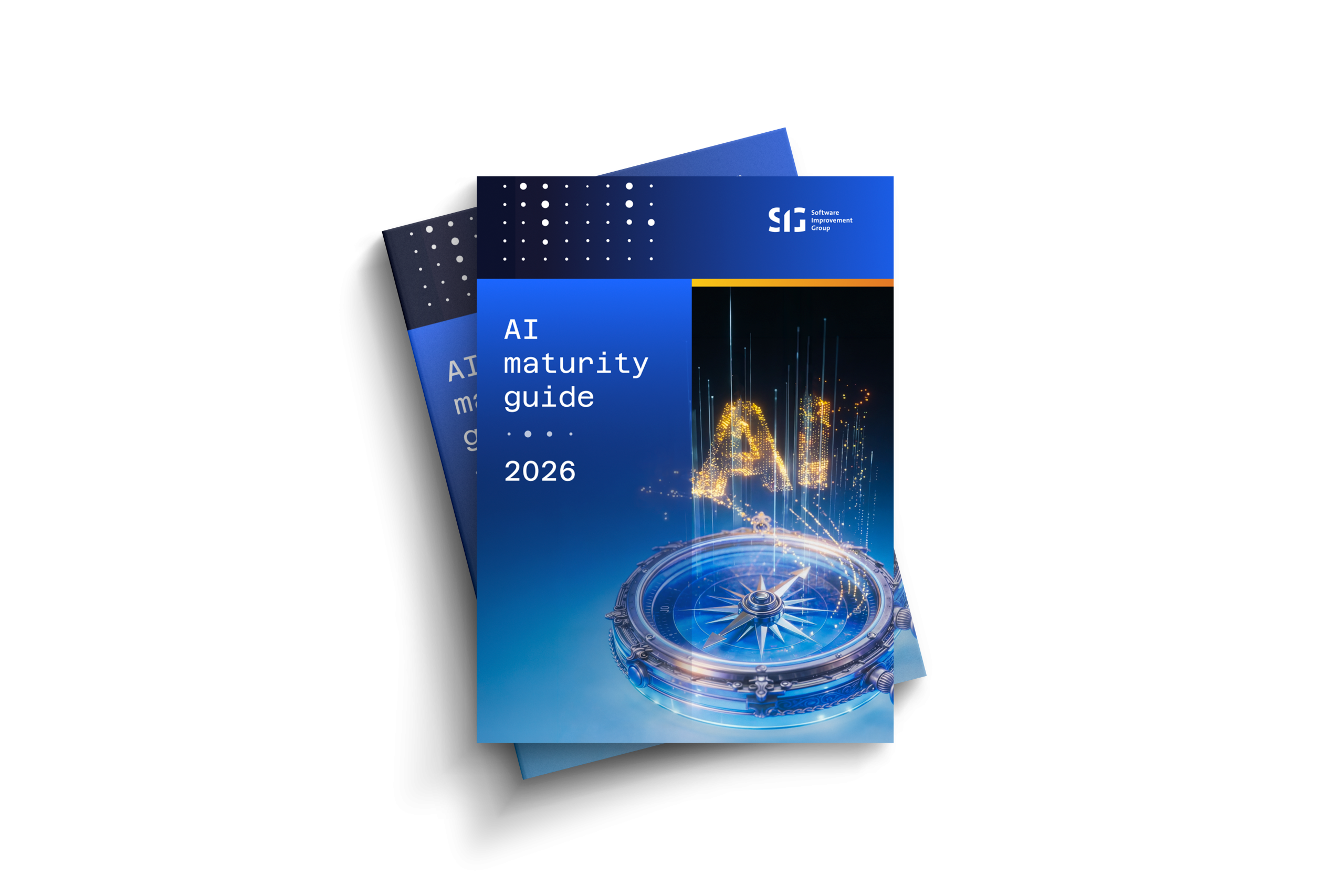
20 practical steps for board members, CTOs, CISOs, and GRC leaders to move from AI ambition to genuine AI control — across governance, risk, development, and security.
of organizations use AI in at least one function.
across all systems in production, only 1.5% are classified as AI systems.
concrete steps to close the gap.
Most leadership teams still struggle to answer the most basic questions about their AI footprint. This guide gives you a shared language — and a clear plan of action.
Each section of the guide speaks directly to a leadership role — start with yours, then use the other sections to understand what to expect from your peers.
Setting direction, asking the right questions, and demanding portfolio-level visibility across all AI initiatives and risks.
Turning fast-moving regulation and standards into a clear, workable AI governance system aligned with ISO/IEC 42001.
Extending security and resilience practices to AI-assisted development and AI systems running in production at scale.
Building and running AI-enabled software in a structured, measurable way — including governance of AI-assisted and agentic development.
AI maturity will not come from a single project, pilot, or purchase. It will come from a steady, deliberate shift in how you govern your software and AI as one portfolio.
Elected co-editor of the EU AI Act security standard, lead author of the global standard on AI system life cycle processes (ISO/IEC 5338), key contributor to ISO/IEC 27090, and founder of the OWASP AI Exchange — effectively open-sourcing international AI security standardization.

FREE DOWNLOAD