
Request a Software portfolio scan
A quick, independent assessment of your key systems, risks, and technical debt.
Software Improvement Group has been named a Leader in the 2026 Gartner® Magic Quadrant™ for Technical Debt Management Tools.
A four-step playbook with practical resources to help CIOs and CTOs review 2025,
assess IT maturity, prepare for AI governance, and evaluate software portfolio health.
2026 planning is already underway, and many CIOs, CTOs and other technology leaders are asking the same questions: Where do we stand? How can we best leverage AI? What should we prioritize next year?
This 4-step IT governance playbook gives you a clear, structured way to answer those questions. It focuses on four areas that will define IT governance in 2026: the shifts from 2025, your current IT maturity, your AI governance readiness, and the health of your software portfolio.
Use it with your leadership team to clarify priorities and support planning decisions as you head into 2026.

The clients we work with within the telecommunications industry are all clear on one thing: software is powering entire organizations. But far too often, what’s under the hood isn’t ready for the journey ahead.
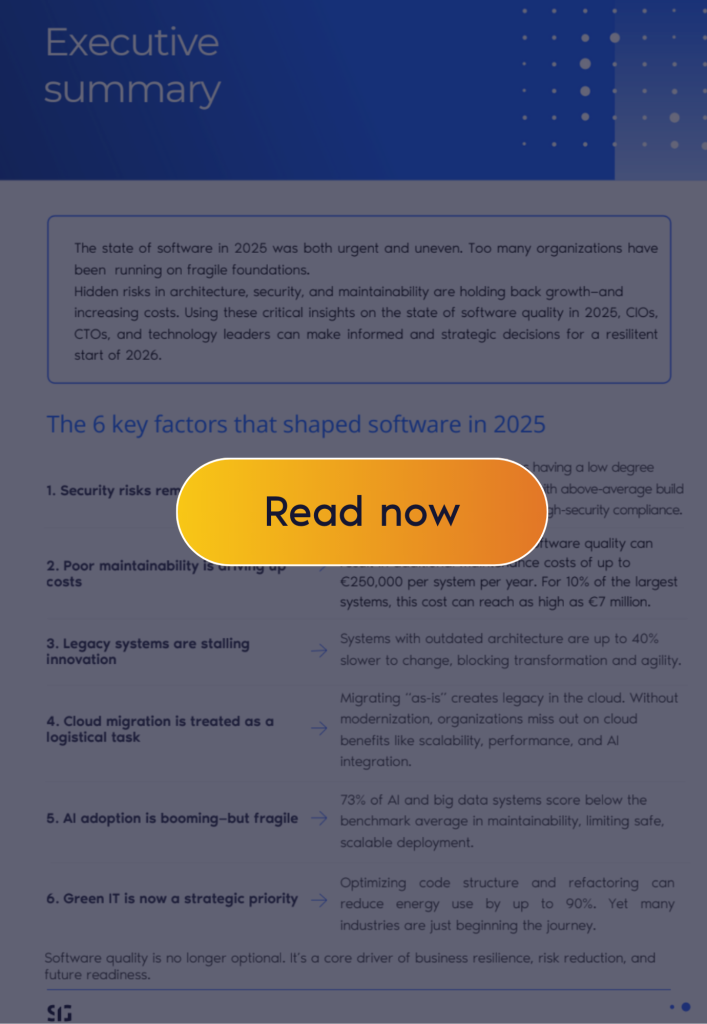
Our Telecom State of Software 2025 analysis highlights six factors every CIO should incorporate into planning: rising maintenance costs, fragile AI foundations, persistent security gaps, and cloud migration debt.
These themes will form the backdrop for your transformation goals in 2026.
Telecom State of software 2025 report
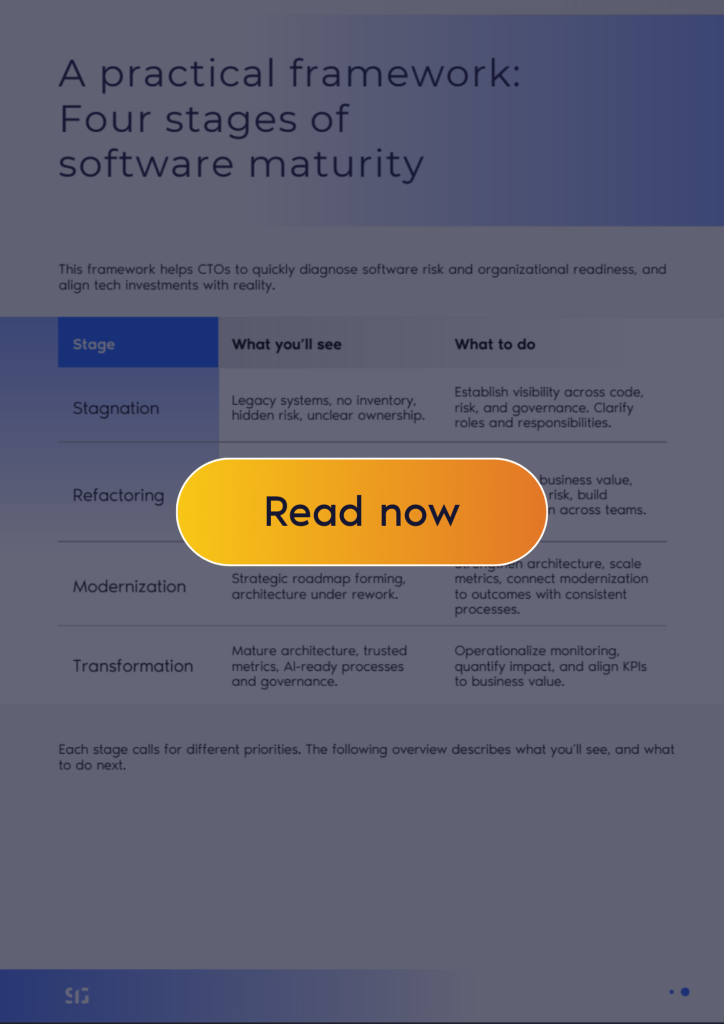
A clear view of your IT maturity is essential for planning 2026. Your maturity stage determines how quickly you can execute, how effectively you can govern AI, and how well your systems support business goals.
Our IT Maturity Framework is based on 25+ years of analyzing software systems and guiding global technology leaders to increase innovation, lower costs, and move faster. It helps you pinpoint where you stand today — from Stagnation to Transformation.
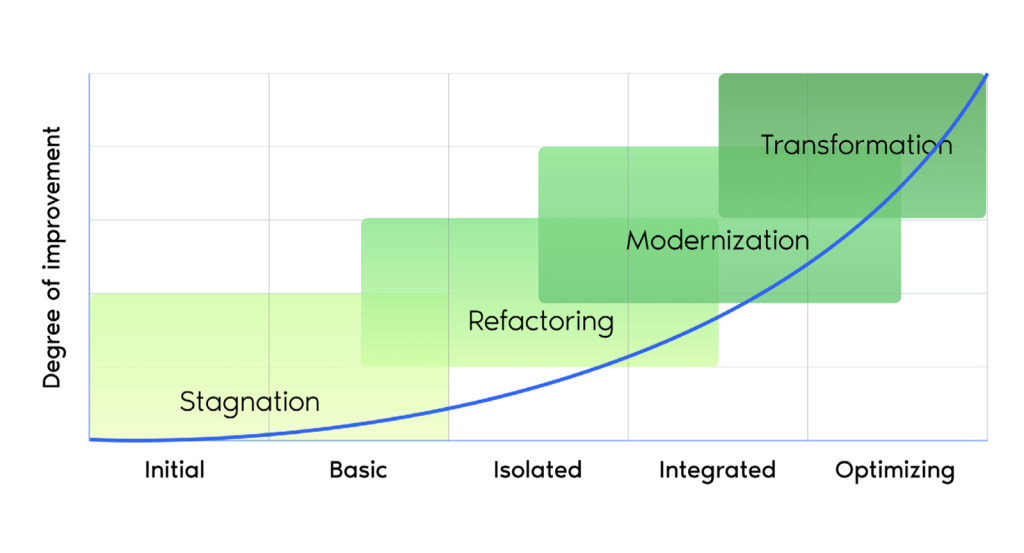
Stage 1: Stagnation
Operating with limited insight. Engineering decisions drive priorities, not business outcomes.
Stage 2: Refactoring
Firefighting is reduced, but improvements are still isolated and incremental.
Stage 3: Modernization
Teams can execute coordinated system-level change, but alignment with the business is not yet consistent.
Stage 4: Transformation
IT becomes a strategic partner that drives innovation. Few organizations are here — but every CTO should aim for it.
These stages form a sequence, not a menu. Each one builds the technical, cultural, and organizational capacity for the next. Moving too fast — especially with AI — can amplify unresolved weaknesses.
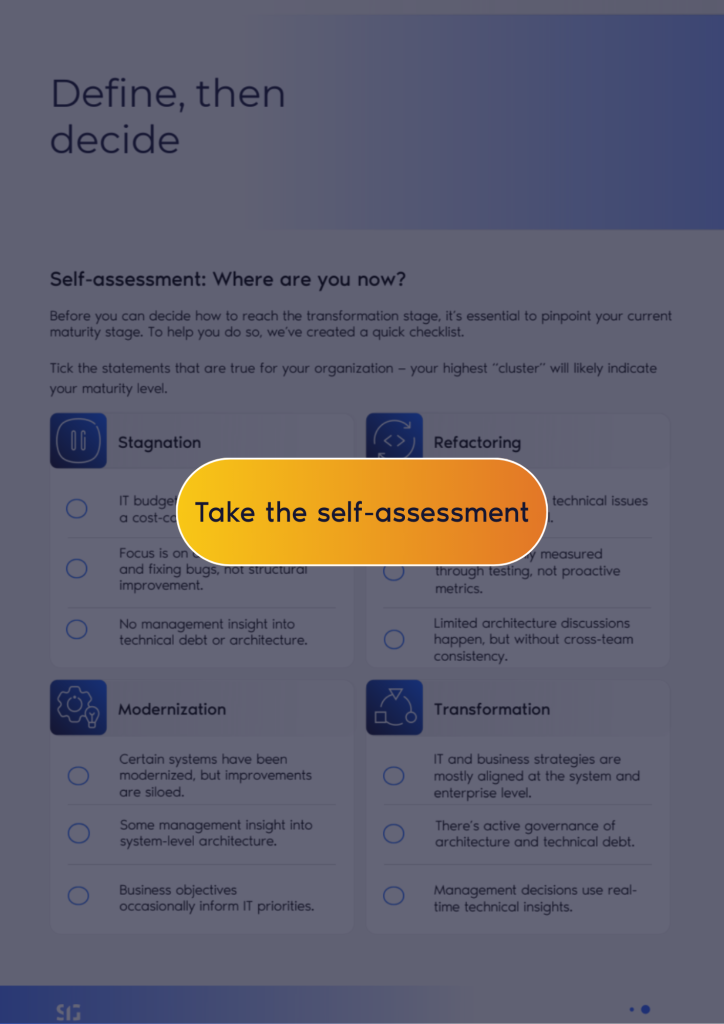
→ Discover the typical signals of each stage and the priorities leaders should focus on at each point. The self-assessment will help you figure out where your organization currently stands.
IT maturity framework
Maturity self-assessment
The biggest challenge is no longer writing code; it’s about understanding it at scale and governing it across your systems.
So, let’s first address the elephant in the room: If your software maturity is low, should you hold off on AI coding adoption? That’s like asking a group of children not to touch the candy you left out on the table…it’s simply not going to work. Adoption is already happening: 90% of developers use AI tools in their workflow.
The key isn’t prohibition. It’s governance.
Success depends on intentional use, supported by visibility and oversight. AI can — and should — enhance productivity. But it must not come at the expense of quality, security, or compliance.
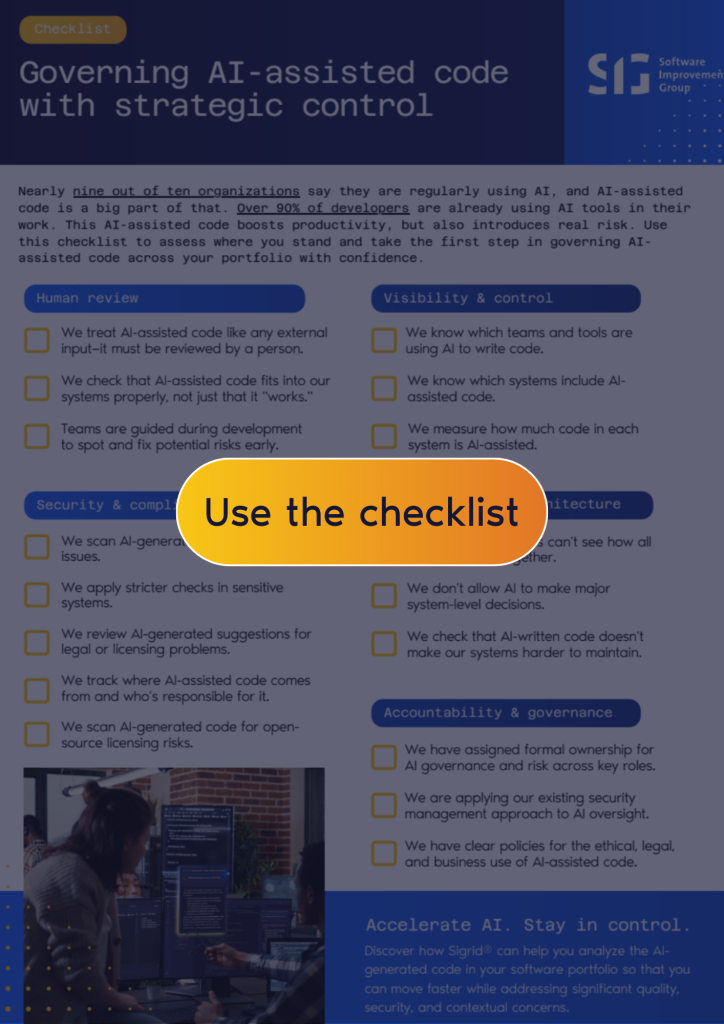
→ Discover the 19 practical steps to AI readiness for board members, executives, and IT leaders and evaluate how well you’re currently governing AI-assisted code across your portfolio.
Practical steps to AI readiness
AI readiness checklist
Successful planning starts with a clear understanding of where you stand.
Many organizations operate with limited insight into the state of their software landscape.
Common characteristics include:
These gaps already carry significant risk. Today, an average Telecom system contains 19 security vulnerabilities, and poor build quality drives millions in annual maintenance costs. Generative AI amplifies both sides of this equation.
The final — and most critical — step is gaining a clear, factual view of your IT landscape.
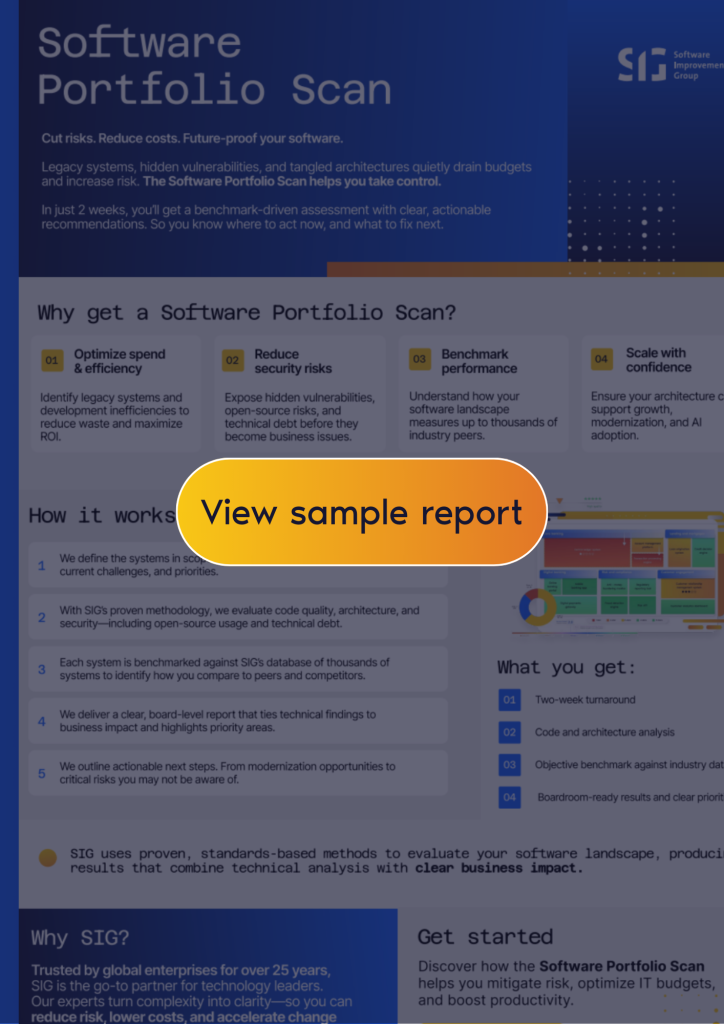
→ A Software Portfolio Scan provides an objective assessment of your entire application estate and can give you the insight needed to set priorities for 2026 with confidence.
Software portfolio scan (sample)
Request a Software portfolio scan
A quick, independent assessment of your key systems, risks, and technical debt.